01 March 2007

Arthur M. Schlesinger, Jr., R.I.P.


Editor's Note: We find little to celebrate in the historical works, and less in the political contributions and editorials of Schlesinger. However, two of his causes we can admire. First, his strong anti-communism in an age when liberalism embraced communism without nary a pause. Second, his continued opposition to politically correct history and multiculturalism.


"However liberal, he was not a slave to what came to be called political correctness. He spiritedly defended the old-fashioned American melting pot against proponents of multiculturalism, the idea that ethnicities should retain separate identities and even celebrate them. He elicited tides of criticism by comparing Afrocentrism to the Ku Klux Klan."

“What the hell,” he answered when questioned by The Washington Post about his attack on multiculturalism. “You have to call them as you see them. This too shall pass.”


and from the Washington Post:
"Political correctness -- 'the attempt to teach history in the schools in order to please a variety of ethnic history groups.' The result, he argued, 'disunites the American past.'"

"Schlesinger also was a longtime contributor to The Wall Street Journal's op-ed page. The Journal's editorial page editor Robert Bartley told the Boston Globe in 1997 that while the liberal Schlesinger wrote from 'the other side of the great chasm of opinion we have,' he did so with 'grace and rare reasonableness.' And, Bartley added, 'I can't think of anyone I'd rather have had writing for us over the past 25 years.'"

04 February 2007

Nota Bene: The Literary Tenor of the Times


Unable as usual to resist the absurd, the New York Times recently attempted to find and certify the best work of American fiction that appeared in the last quarter-century, and perhaps to dilute their unconscious embarrassment published a list of the runners-up. Asked to serve on the enormous panel of solons they had assembled for the purpose, I declined on the grounds that neither I nor just about anyone else has a sufficiently wide or deep knowledge of all that has been written in the period, and that even if we had, such a determination is impossible, especially at the hands of literary people who have intellectual debtors and creditors, protégés, and favorites (including, not least, themselves).
But suppose for a moment that reality is suspended and the perfectly disinterested judges, after considering various worthies, were left to decide which of Homer, Dante, and Shakespeare would fill the last slot in their list. Though they might make the choice, it would be meaningless. A meaningless decision, however, would be easy in the literary tenor of these times, which makes itself known not so much in works of fiction but in the vast apparatus that contains and to an alarming extent directs them.
One would have to have spent the last 40 years in a bathyscaphe to be unaware of the conventions, requirements, strictures, and demands that aggressively have (almost) monopolized the field. To anyone who reads, writes, or publishes, they are inescapable, the senseless, destructive, and cruel companions to a suicidal slide of culture, remarkable for the degree to which they are taken as palliatives and correctives rather than the acid that eats away the bone. After all, the addict views narcotics, the criminal his next score, and the lemming the open air beyond the cliff edge—as salvation.
And thus the literary tenor of the times is saturated above all with nihilism and its outrider, contempt; followed by politicization and its outrider, conformity. The first pair of abominations serves to dissolve the supple, living flesh of civilization—whether in blunt Leninist political combat hidden in the folds of academic relativism, or in the unbridled Satanic ravings of popular culture that society has lost the courage to dismiss outright. And the second pair of abominations serves to cast what remains after the dissolution into a slipshod orthodoxy as gray, hard, and dead as concrete.
Strangely enough, the enforcers and beneficiaries of this orthodoxy, which in spirit goes far beyond even the standard obeisances to race, sex, class, economics, and selected dogma in international relations and meteorology, think they are beleaguered revolutionaries. For example, in affirming his courage, Norman Mailer—everything he has done has been to affirm his courage, which perhaps one should not condemn in a man who bears such a strong physical resemblance to Mamie Eisenhower—pronounces that he has been a leftist all his life, something that in Manhattan and Brooklyn Heights may not be quite as dangerous as he hallucinates.
And yet politics themselves, of whatever coloration, are less damaging an intrusion upon the literary enterprise than the now deeply engraved notion that literature cannot escape them. Political discourse can be literature, as Pericles, Lincoln, and Churchill prove, but literature that is political discourse destroys itself, as history proves (pace the febrile tracts of tenured lunatics: Disguised Vaginal Narratives of the French & Indian War: The Hidden Meanings of Bernard de Con's Account of the Assault on Fort Ticonderoga—A Novel). Whereas great political writing, always primarily literary, is equipped to transcend the causes and contentions of the day, a literary work that rests upon a political cause will follow it into oblivion. Lincoln and Churchill infused politics with the higher truths to which literature is the handmaiden, but the modern convention excludes these truths by subordinating literature to politics.
One seldom encounters pure nihilism, for just as anarchists are usually very well-organized, most of what passes for nihilism is a compromise with advocacy. Present literary forms may spurn the individual, emotion, beauty, sacrifice, love, and truth, but they energetically embrace the collective, coldness of feeling, ugliness, self-assertion, contempt, and disbelief. And why? Simply because the acolytes of modernism are terribly and justly afraid. They fear that if they do not display their cynicism they will be taken for fools. They fear that if they commit to and uphold something outside the puppet channels of orthodoxy they will be mocked, that if they are open they will be attacked, that if they appreciate that which is simple and good they will foolishly have overlooked its occult corruptions, that if they stand they will be struck down, that if they love they will lose, and that if they live they will die.
As surely they will. And others of their fears are legitimate as well, so they withdraw from engagement and risk into what they believe is the safety of cynicism and mockery. The sum of their engagement is to show that they are disengaged, and they have built an elaborate edifice, which now casts a shadow over every facet of civilization, for the purpose of representing their cowardice as wisdom. Mainly to protect themselves, they write coldly, cruelly, and as if nothing matters.
But life is short, and things do matter, often more than the human heart can bear. This is an elemental truth that neither temporarily victorious nihilism, nor fashion, nor cowardice can long suppress, which is why the literary tenor of the times cannot and will not last. And which is one reason among many why one must not accept its dictates or write according to its conventions. These must and will fall, for they are subject to constant pressure as generation after generation rises in unprompted affirmation of human nature. And though perhaps none living may see the change, it is an honor to predict and await it.

25 January 2007

Quote for the Day


"Freedom is never more than one generation away from extinction. We didn't pass it to our children in the bloodstream. It must be fought for, protected, and handed on for them to do the same, or one day we will spend our sunset years telling our children and our children's children what it was once like in the United States where men were free."
-- Ronald Reagan

12 January 2007

Quote for the Day


"Suppose that a great commotion arises in the streets about something, let us say a lamp-post, which many influential people desire to pull down. A grey-clad monk, who is the spirit of the Middle Ages, is approached upon the matter, and begins to say, in the arid manner of the Schoolmen, 'Let us first of all consider, my brethren, the value of Light. If Light be in itself good-' At this point he is somewhat excusably knocked down. All the people make a rush for the lamp-post, the lamp-post is down in ten minutes, and they go about congratulating each other on their unmediaeval practicality. But as things go on they do not work out so easily. Some people have pulled the lamp-post down because they wanted electric lights; some because they wanted old iron; some because they wanted darkness, because their deeds were evil. Some thought it not enough of a lamp-post, some too much; some acted because they wanted to smash municipal machinery; some because they wanted to smash something. And there was war in the night, no man knowing whom he strikes. So, gradually and inevitably, today, tomorrow, or the next day, there comes back the conviction that the monk was right after all, and that all depends on what is the philosophy of Light. Only what we might have discussed under the gas-lamp, we must now discuss in the dark."
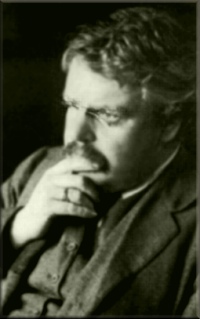
-- G.K. Chesterton --

15 September 2006

Oriana Fallaci, R.I.P.


Oriana Fallaci, Journalist and Author
29 July 1929 - 15 September 2006
Rest in Peace

11 September 2006

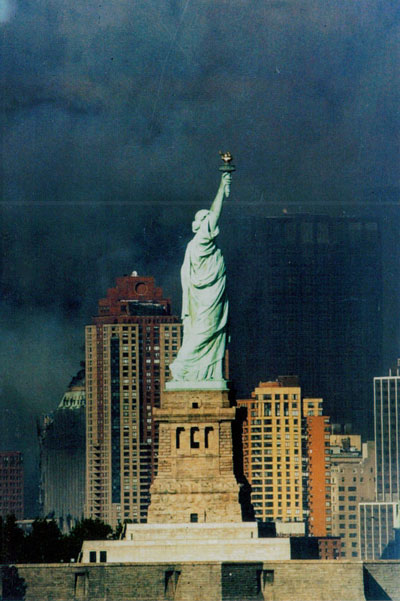
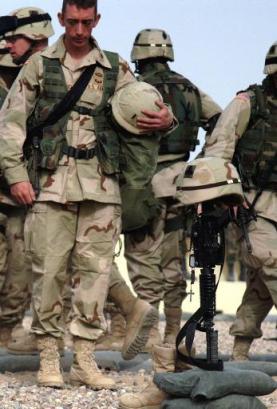
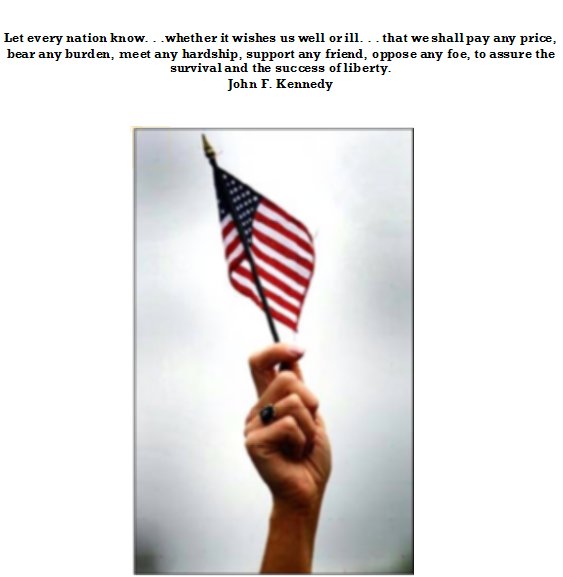
Remember...


Editor's note: We remember with sadness those slain on September 11th. We honor with deep gratitude those fallen for duty and country.


10 September 2006

The price of victory


Editor's note: Mark Helprin wrote this article five years ago. We think that it is worth rereading.


We Beat Hitler, We Can Vanquish This Foe Too
By Mark Helprin
Posted September 12, 2001
Wall Street Journal, editorial page


America, it is said, is slow to awaken, and indeed it is, but once America stirs, its resolution can be matchless and its ferocity a stunning surprise.

The enemy we face today, though barbaric and ingenious, is hardly comparable to the masters of the Third Reich, whose doubts about our ability to persevere we chose to dissuade in a Berlin that we had reduced to rubble. Nor is he comparable to the commanders of the Japanese Empire, whose doubts about our ability to persevere we chose to dissuade in a Tokyo we had reduced to rubble. Nor to the Soviet Empire that we faced down patiently over half a century, nor to the great British Empire from which we broke free in a long and taxing struggle that affords a better picture of our kith and kin than any the world may have today of who we are and of what we are capable.

And today's enemy, though he is not morally developed enough to comprehend the difference between civilians and combatants, is neither faceless nor without a place in which we can address him. If he is Osama bin Laden, he lives in Afghanistan, and his hosts, the Taliban, bear responsibility for sheltering him; if he is Saddam Hussein, he lives in Baghdad; if he is Yasser Arafat, he lives in Gaza; and so on. Our problem is not his anonymity but that we have refused the precise warnings, delivered over more than a decade, of those who understood the nature of what was coming — and of what is yet to come, which will undoubtedly be worse.

The first salvos of any war are seldom the most destructive. Consider that in this recent outrage the damage was done by the combined explosive power of three crashed civilian airliners. As the initial shock wears off it will be obvious that this was a demonstration shot intended to extract political concessions and surrender, a call to fix our attention on the prospect of a nuclear detonation or a chemical or biological attack, both of which would exceed what happened yesterday by several orders of magnitude.

It will get worse, but appeasement will make it no better. That we have promised retaliation for decades and then always drawn back, hoping that we could get through if we simply did not provoke the enemy, is appeasement, and it must be quite clear by now even to those who perpetually appease that appeasement simply does not work. Therefore, what must be done? Above all, we must make no promise of retaliation that is not honored; in this we have erred too many times. It is a bipartisan failing and it should never be repeated.

Let this spectacular act of terrorism be the decisive repudiation of the mistaken assumptions that conventional warfare is a thing of the past, that there is a safe window in which we can cut force structure while investing in the revolution in military affairs, that bases and infrastructure abroad have become unnecessary, that the day of the infantryman is dead, and, most importantly, that slighting military expenditure and preparedness is anything but an invitation to death and defeat.

Short of a major rebuilding, we cannot now inflict upon Saddam Hussein or Osama bin Laden the great and instantaneous shock with which they should be afflicted. That requires not surgical strikes by aircraft based in the United States, but expeditionary forces with extravagant basing and equipment. It requires not 10 aircraft carrier battle groups but, to do it right and when and where needed, 20. It requires not only all the infantry divisions, transport, and air wings that we have needlessly given up in the last decade, but many more. It requires special operations forces not of 35,000, but of 100,000.

For the challenge is asymmetrical. Terrorist camps must be raided and destroyed, and their reconstitution continually repressed. Intelligence gathering of all types must be greatly augmented, for by its nature it can never be sufficient to the task, so we must build it and spend upon it until it hurts. The nuclear weapons programs, depots, and infrastructure of what Madeleine Albright so delicately used to call "states of concern" must, in a most un-Albrightian phrase, be destroyed. As they are scattered around the globe, it cannot be easy. Security and civil defense at home and at American facilities overseas must be strengthened to the point where we are able to fight with due diligence in this war that has been brought to us now so vividly by an alien civilization that seeks our destruction.

The course of such a war will bring us greater suffering than it has brought to date, and if we are to fight it as we must we will have less in material things. But if, as we have so many times before, we rise to the occasion, we will not enjoy merely the illusions of safety, victory, and honor, but those things themselves. In our history it is clear that never have they come cheap and often they have come late, but always, in the end, they come in flood, and always in the end, the decision is ours.


13 August 2006

Nota Bene: I will not doubt

I will not doubt, though all my ships at sea
Come drifting home with broken masts and sails;
I shall believe the Hand which never fails,
From seeming evil worketh good to me;
And, though I weep because those sails are battered,
Still will I cry, while all my best hopes lie shattered,
"I trust in Thee."

I will not doubt, though all my prayers return
Unanswered from the still, white realm above;
I shall believe it is an all-wise Love
Which has refused those things for which I yearn;
And though at times, I cannot keep from grieving,
Yet the pure ardor of my fixed believing
Undimmed shall burn.

I will not doubt, though sorrows fall like rain,
And though troubles swarm like bees above a hive;
I shall believe the heights, for which I strive,
Are only reached by anguish and by pain;
And though I groan and tremble with my crosses,
I yet shall see, through all my severest losses,
The greater gain.

I will not doubt, well anchored in the faith,
Like some staunch ship, my soul braves every gale,
So strong its courage that it will not fail
To breast the mighty, unknown, sea of death.
Oh, may I cry when body parts with spirit,
"I do not doubt," so listening worlds may hear,
With my last breath.
-Ella Wheeler Wilcox

Quote for the Day, part 3 (the friendship trilogy)

"Think where man's glory most begins and ends and say -- my glory was that I had such friends."

- William Butler Yeats


Editor's note: Fare thee well, Lawrence of Rome, and Happy Trails.

Quote for the Day, part 2 (the friendship trilogy)


"We are all travellers in the wilderness of this world, and best that we can find in our travels is an honest friend."

-Robert Louis Stevenson

Quote for the Day, part 1 (the friendship trilogy)


"Don't walk in front of me,
I may not follow;
don't walk behind me,
I may not lead;
Walk beside me, and
just be my friend."

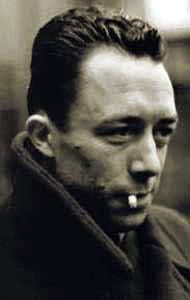
-Albert Camus


Editor's Note: We present today's "Quotes" in honour of friendship. One of our writers, Lawrence of Rome, leaves Videat Dominus et Requirat tomorrow for an extended sabbatical. Though seperated by many miles, we rejoice in the journey that stretches before him and hope to convene, one evening long from now, at a tavern not unlike those described by Tolkien and Lewis, where, beneath a heavy cloud of smoke, with a cheery fire, and many a hearty drink upon the rough-hewn table, we will speak of great things.

07 August 2006

Quote for the Day


"To remain ignorant of things that happened before you were born is to remain a child. What is human life worth unless it is incorporated into the lives of one's ancestors and set in a historical context?"

—Cicero (106-43 B.C.)

06 August 2006

Quote for the Day, part two


"The best laid schemes o' Mice an' Men,
Gang aft agley,
An' lea'e us nought but grief an' pain
For promis'd joy."

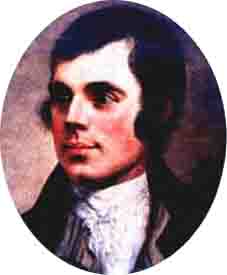
Robert Burns

Nota Bene: Ben Stein puts it bluntly


How to Lose to Terrorists
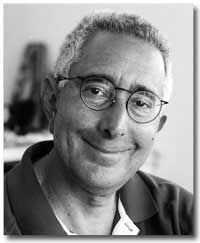
by Ben Stein


Published 7/31/2006

We are in real serious trouble, and I'll tell you how and why I know it:

* Because the Hezbollah -- as has been well reported -- launches missiles at purely civilian targets in Israel as a matter of course, and no one in Europe or in the American left says "boo" about it. It's considered the Hezbollah's "right" to kill Israelis and when they do, they boast about it and promise to do more;

* Because it's been also well documented that the Hezbollah hides behind civilian targets and adjacent to civilian dwellings in Lebanon to fire its rockets at Israel, and when Israel fires back and mistakenly hits a home with civilians, the world of "intellectuals" and "thinkers" blames Israel and calls Israel bloodthirsty;

* Because when the Israelis kill civilians, they apologize, but when the terrorists kill civilians, they brag -- and the beautiful people scream at Eretz Israel and excuse the terrorists;

* Because if you substitute "America" for "Israel" and the "terrorists in Iraq" for the Hezbollah, you get what's happening in Iraq;

* Because it is impossible to beat a terrorist movement without using terror tactics, and we as a people of compassion and restraint, both in Israel and the U.S., will not use terror tactics even when survival is at stake, and this means we will not survive.It is very much as if, after Pearl Harbor, after the bombing of London, we said, "We will fight the Japanese and the Nazis, but we will only use humane means, and we will show total restraint and will never kill civilians. And we will search our souls and agonize about every move.

"It is this attitude that kept the United States from winning in Korea, in Vietnam, and now in Iraq. If we had followed that code of suicide, we would have lost World War II and the world would have been plunged into eternal darkness. You cannot fight inhumane people with humane means. You cannot fight savages with one hand -- no, two hands -- tied behind your back. No wars were ever won using restraint and only civilized means. That's a formula for complete defeat and for the end of civilized life. If we allow our media and French intellectuals to prevent us and the Israelis from using the means necessary to win, we'll lose...in Lebanon, in Iraq, and everywhere and this civilization is very well worth preserving. Yes, as sad as it would be to use terror tactics to win a war, it would be incomparably worse to lose. At the end of the war we win, there is light. At the end of the war we lose, there is the end.

Ben Stein is a writer, actor, economist, and lawyer living in Beverly Hills and Malibu. He also writes "Ben Stein's Diary" in every issue of The American Spectator.

Nota Bene: G.K. Chesterton's prophetic tale

From The American Spectator


The Flying Inn Reconsidered
By Hal G.P. Colebatch
Published 8/3/2006 12:07:46 AM

When I was a child going through my late father's library my maternal grandfather pointed out an old copy of G.K. Chesterton's The Flying Inn, published in 1914, and said: "That's a good story!" I wish now that Grandfather had lived long enough for me to talk to him about many things. I am not sure why he, Mayor, Member of Parliament, Knight, and general pillar of the community, with no sign I could detect of even my father's bohemian streak, thought this tale of rum-disbursing rapscallions in flight from the law was a good story, but I took him at his word and when I read it found he was right. It is also curiously prophetic.

It was condemned to many years of neglect, presumably because of what was then seen as the quaintness and irrelevance of its subject matter -- an Islamic attack on and infiltration of England. It has, however, recently been reissued in the U.S. by Dover publications.

It is, as one of its excellences, a swinging hit at political correctness, penned a couple of generations before the term political correctness was dreamed up. The British politician, Lord Ivywood, by a piece of legal trickery, bans the drinking of alcohol in England. That is, alcohol is not banned outright, but can only be sold by an inn displaying a sign, and the signs are banned.

The good people, like irresponsible vagabonds, travel the country just ahead of the law, first with a donkey and then a motor car, with a keg of rum and a cheese, as well as an inn-sign rescued from the destroyed inn "The Old Ship," dispersing cheer to the workmen who have been denied a drink, singing merry songs on the way (naturally most of the establishment figures who support prohibition still manage to evade it for themselves in other ways).

But there is more sinister parallel development. Targeting the traditional English pub is only part of the politically correct targeting of all English institutions, traditions and identity, enforced by a British establishment enthralled by Islamicism. We also hear little asides about the cross being gradually banned, or rather, replaced by a combined cross-and-crescent symbol ("The Crescent, the growing thing...the religion of progress"). Smart art circles adopt Islamicist art. Then there are growing hints of political preparations for polygamy, the institution of the harem and the suppression of women.

Anticipating what would be one of the characteristics of 20th century totalitarianism and 21st century relativism, history is rewritten to show that England was originally an Islamic country. The old pub name "The Saracen's Head," probably dating from some memory of the Crusades, is, so the people are told, really a corruption of "The Saracen Is Ahead." "The Green Man" (another traditional English pub name which is in fact probably a fossil reference to very ancient fertility beliefs) was actually, according to the new revisionists, a corruption of "The Agreeing Dragoman."

One might think this pseudo-history a flight of fantasy too far. But in 2004 the Mufti of Australia and New Zealand, Taj Al-Din Hamad Abdallah Al-Hilali, who has described the holocaust as a Zionist lie, also claimed that Australia was originally Islamic land, settled by Afghans. The Australian Aborigines were their descendants. (In fact Aborigines reached Australia several tens of thousands of years ago. Some so-called "Afghans" -- actually mostly Iranians - arrived in the 19th century to work as camel-drivers in the outback.)

This real-world Mufti claimed as evidence of the Aborigines' Muslim origins the facts that they "have customs such as circumcision, marriage ceremonies, respect for tribal elders, and burial of the dead -- all customs that show that they were connected to ancient Islamic culture before the Europeans set foot it Australia." This real-world rubbish actually surpasses the tortured rationalizations and historical revisionisms of the fictional Islamicists in The Flying Inn. Apparently no one told the Mufti that circumcision (actually many Aborigines practiced subincision, a very different thing) far predates Islam and is characteristically Jewish, and marriage ceremonies, respect for elders, and burial of the dead are features of practically every society.

The same claim has been advanced by some modern Islamic writers for America, including statements that Columbus found mosques there. (The point here is that Islamic law states Muslims possess by right any land that once formed part of the House of Islam. This is a key element in Islamic claims against the existence of Israel.)

As The Flying Inn goes on it gradually becomes apparent that Ivywood is working towards destroying the entire Christian and Western identity of England. As Catholic priest Addison H. Hart pointed out in a recent essay, while Ivywood is using Islamicism as a tool, he is also a creature of pseudo-Nietzscheanism. "I see the breaking of barriers," he says. "Beyond that I see nothing." They are words that could be straight from modern deconstructionism and they encapsulate its ultimately Hellish nature. Ivywood is, ultimately, the voice of Antichrist. His associates and tools, his "false prophets," are a strange little Turk, Misysra Ammon, and a miserable crawling journalist, Hibbs However.

Against Ivywood is an at first tiny resistance movement: a giant, red-haired, hard-drinking Irishman named Patrick Dalroy, a thoroughly English pub-owner named Humphrey Pump, dispossessed landlord of "The Old Ship," who loves Pickwick and has the history of the country in his bones, and Lord Ivywood's poet cousin, an aesthete who is, as a later generation would put it, mugged by reality. After many adventures the story concludes with England roused, a decisive battle against the Islamicist Army which Lord Ivywood has been secretly shipping in, and Dalroy getting the girl. Like Nietzsche, Lord Ivywood goes mad, babbling of the Superman in an asylum.

As with other books by Chesterton, when I first read it I was puzzled but liked it. Perhaps part of what appealed to me was its obviously fantastical nature. When Chesterton wrote it, on the eve of the First World War, the great perceived threat to England and to the "Western and Christian heritage" was not Islamicism, which had been out of such questions for centuries, but German militarism. When I read it, the Cold War had been on for all my life, and showed no signs of ending -- or at least not of ending in victory. The Flying Inn had nothing to do with such "present discontents." But it is in my mind yet, when those other things are gone.

Hal G.P. Colebatch is a lawyer and author and lectures part-time in legal studies at Notre Dame University in Western Australia. His book Blair's Britain was selected as a Book of the Year in the London Spectator.

Quote for the Day


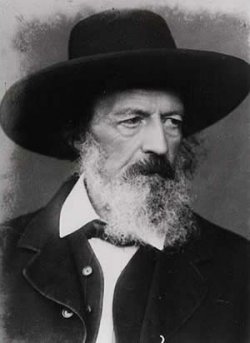
A poem, in honour of Alfred, Lord Tennyson, born this day in 1809. He requested this poem be placed as a requiem, at the end of any collection of his poetry.


Crossing the Bar

Sunset and evening star,
And one clear call for me!
And may there be no moaning of the bar,
When I put out to sea,

But such a tide as moving seems asleep,
Too full for sound and foam,
When that which drew from out the boundless deep
Turns again home.

Twilight and evening bell,
And after that the dark!
And may there be no sadness of farewell,
When I embark;

For though from out our bourne of Time and Place
The flood may bear me far,
I hope to see my Pilot face to face
When I have crossed the bar.

03 August 2006

Nota bene: Bishop Vasa tells a modern-day parable

True obedience, whether convenient of not, is not easy

7/28/06

by Bishop Robert Vasa

The operative word of the week has been heat. The 100-degree-plus temperatures have made any afternoon activities nearly impossible and have been conducive to naps in the shade. Clearly, this is the situation not only in southern Malheur County, but nationwide as well. In many ways, southern Malheur County is a good place to be when it is this hot, since the July heat seems to fit perfectly well with the desert terrain. In other words, the heat is not unexpected. The situation would be a lot different if one expected moderate temperatures and then encountered these furnace-like conditions.

I have found over the years that the expectations we bring to a situation determine, to a very large extent, the ease or difficulty we experience in coping with that situation. Expecting brutal heat and encountering it makes the bearing of that heat much easier than expecting moderate temperatures and smacking into the wall that is the reality. Expectations, whether about weather or what others ought to do or about how life ought to be or what people will do or how a particular situation will be resolved, determine to a very large extent our immediate emotional reactions.

I believe the same holds true for expectations about Church teachings. When there is an expectation, as held by many people, that some stable and traditional teachings of the Church will change or even that they can change, then there is a lot of room for disillusionment, frustration, anger and distress when those unrealistic expectations are not met. In many ways, the difficulty is not what the Church teaches but the expectation that those teachings should be done away with or that they will change in the future.

I had the opportunity on Saturday to watch some 4-H equestrian events. These were very simple. The youngsters simply had their horses walk, trot or gallop in the circle of the arena both clockwise and counterclockwise.

I discovered that there were a lot of subtle, and some not so subtle, rules that these youngsters needed to learn. First, they needed to stay on the horse if they expected to receive some kind of award. Seems pretty obvious, but how many adults seem to think that they are still in the ecclesial running even if they do not go to church. How the young people held their free hand, whether their legs were too straight or their heels too far in or too far out and how they sat in the saddle were all taken into account in the “judging.”

They were also evaluated on how well they were able to regulate their horses. This meant that the horse, which often has a mind of its own, had a major impact on whether the youngster received an award or not.

One of the things that I clearly do not understand, and I have yet to encounter someone to give me a satisfactory explanation, is the concept of having a horse in the right or left lead. As I understand this, when a horse gallops or runs, it leads with either its right or left front leg. Even though both front legs stretch out at the same time, one leg “leads” the other, and apparently there is a way to instruct the horse which lead to use. In the arena, as I understand it, it is proper for the horse to have one lead while going clockwise and the other lead while going counterclockwise. I honestly do not know what difference it makes to either the horse or the rider — or the judge for that matter — but it is apparently important.

In watching the horses, I thought that some of them understood quite well and almost automatically which lead was proper for the given direction. Others clearly had a preference for one lead or the other and tended to use that lead regardless of the arena direction.

Thus a given horse that tended always to use a left lead appeared to be wonderfully obedient and well trained when he was going in one direction, but his persistence in using that same lead when he was going the opposite direction indicated that he was obedient only when “asked” to do what he was going to do anyway. Then the young rider had to be vigilant about repeatedly instructing the horse about which lead to use.

Again, I thought of Church teaching and how easy it is for each of us to accept some teachings of the Church, not because the Church teaches them, but solely because it happens to be what we personally hold anyway. I would call this convenient obedience. In that instance, we are like the horse with the left lead which undoubtedly felt pretty obedient and “good” when what it was going to do anyway was consistent, at that moment, with what its master was asking.

On the other hand, in those instances when the Church asks us to do or accept something which we may not automatically or emotionally easily embrace, then we need to change or convert or alter our mindset in order to bring ourselves into compliance with those teachings. This is inconvenient obedience; it challenges us.

Unfortunately, if there is an expectation that the Church must, should or will change, then the tendency is to hold on to the erroneous belief or practice and even to do so with a certain degree of self-righteousness. The persistence of some horses in returning to their preferred lead was matched by the persistence of young riders in “asking” their mounts to use the correct lead. I do not expect that the horses’ tendency to choose their own lead will incline the judges to change this evaluative criteria.

It seems to me, and I acknowledge that I clearly lack “horse sense,” that using a right or left lead is rather arbitrary, and yet I do not expect the criteria to change. The Church is relentlessly persistent and consistent in Her teachings, and those teachings, contrary to modern relativistic tendencies, are not arbitrary. Despite the lack of arbitrariness, many are just as relentlessly and consistently recalcitrant in their perception that the Church, and not they, needs to or will change.

Obedience is not an easy thing, but a recognition that it is a loving Lord, a Good Shepherd, who asks and instructs us to abandon our own ways and more fully adopt and accept His ways does make true obedience possible — not only convenient obedience but the “inconvenient” type as well.

Vasa is the bishop of the Diocese of Baker, Oregon. This article appeared originally in the Catholic Sentinel of Oregon.

02 August 2006

Of her ass she made a trumpet: Claire Shipman

"Mikhail Gorbachev is generally regarded as the man who broke down the ‘iron curtain’ that separated the communist world from the West and thawed the Cold War between the United States and the Soviet Union."

-ABC News correspondent Claire Shipman, July 12, 2006

01 August 2006

Spucatum tauri: John Kerry leading the way

Ordinarily we try to avoid purely political issues, but this was too tempting to resist. As the photo below shows, John Kerry sure knows how to pack 'em in and lead the way.


At this rate, I'd say his prospects for 2008 look great. He's well on the way to winning the popular vote of Shady Acres retirement home in Des Moines, Iowa.

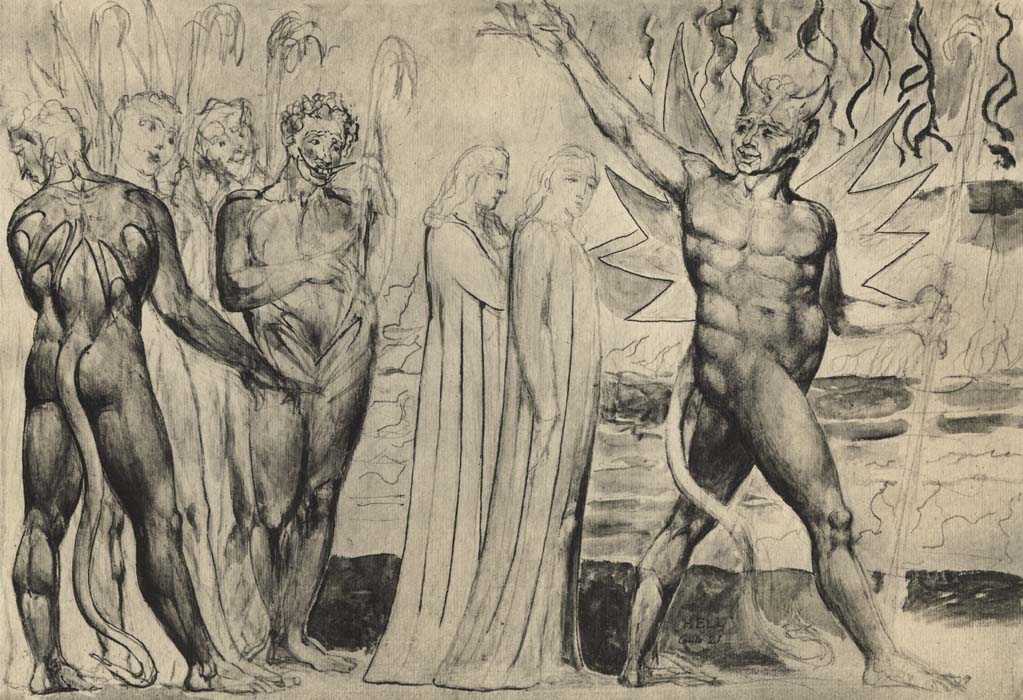
Could Kerry be practicing for his role in the afterlife? We'll leave that one to Dante.

Nota Bene

Today is the birthday of Herman Melville, one of America's greatest literary voices, born 1819 in New York City. Melville wrote these lines in Moby Dick:

"Whenever I find myself growing grim about the mouth; whenever it is a damp, drizzly November in my soul; whenever I find myself involuntarily pausing before coffin warehouses, and bringing up the rear of every funeral I meet; and especially whenever my hypos get such an upper hand of me, that it requires a strong moral principle to prevent me from deliberately stepping into the street, and methodically knocking people's hats off—then, I account it high time to get to sea as soon as I can."

And this after reading Shakespeare for the first time at age 29: "Dolt ... that I am, I have lived more than 29 years, & until a few days ago, never made close acquaintance with the divine William. ... I now exult over it, page after page."